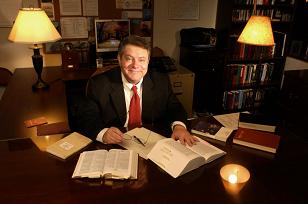
A commenter recently said they did not believe the law of ancient Israel was allowed to incorporate change. As this is an important issue, I thought I would say something about it here on the main blog.
Deuteronomy 4:1-2 says:
“ 1 Hear now, O Israel, the decrees and laws I am about to teach you. Follow them so that you may live and may go in and take possession of the land that the LORD, the God of your fathers, is giving you. 2 Do not add to what I command you and do not subtract from it, but keep the commands of the LORD your God that I give you.”
By this God meant that no one should claim God gave commands he did not give or claim that commands God did give were not given by Him. He clearly did not mean there would be no additional revelation from God because there obviously was additional revelation. He also did not mean to bar common law judicial decisions or additional human laws for Israel. I have reasons for believing this:
1) Look at the example of the case of the daughters of Zelophehad in Numbers chapters 26, 27, and 36. The law was modified to deal with a new circumstance, thereby setting the precedent of common law development.
2) Historically, the Mosaic Law did provide for common law style human legal additions. The rabbinic method of expounding the law to new circumstances actually influenced the development of English and American common law methodology.
3) That is how ancient law codes of this type worked and were understood. The Ten Commandments, or the ten words and they are known to the Jews, are the core principles of the code. The other “commands”, like “if a man steals a sheep . . .” etc are exemplar analytic dispositions to serve as guidelines for judges on how to apply the principles in the central Ten Commandments.
4) In practice it has to be that way. No legal code can deal with all possible future human conduct. Additional common law rulings and or statutes will be necessary to deal with new technology, new scams, new threats, and new business patterns that did not exist when the code was made.
5) Better and brighter men than I have interpreted scripture this way. For example, look at the collective teachings of John Calvin in the Institutes.
The Bible also never says other nations have to have exactly the same laws as ancient Israel. These laws were given by God to Israel. Because they came from God, it makes sense to pay attention to the timeless truths they embody. But, a code for an ancient agrarian people is not adequate for a country with cars, computers, nuclear reactors, and banks.
Wednesday, September 29, 2010


Tuesday, September 21, 2010
Should Social Conservatives Set Their Views to the Side for the November Election
Laurie Higgins from Illinois Family Action writes:
“The Republican governor of Indiana, Mitch Daniels, recently called for a “truce” on the divisive social issues. Republican governor of Mississippi, Haley Barbour, concurs saying, “Any issue that takes people’s eye off of unemployment, job creation, economic growth, taxes, spending, deficits, debts is taking your eye off the ball.”
Earlier I asked, if one of the “social issues” that divided the country were not the slaughter of the most defenseless but were instead the enslavement of African Americans, would these same “moderates,” be chastising conservatives for refusing to subordinate social issues to fiscal issues?
When social conservatives retreat from the cultural and political debate, the cultural and political views of the public are shaped by those who are publicly engaged. Our retreat creates a vacuum that leftists are only too glad to fill with false moral propositions and destructive legislation. Soon there won’t be enough conservatives who think rightly on fundamental social issues, and the ones who do will lack the courage to speak. Society would be much better served by heeding the words of John Adams who said, “Public business, my son, must always be done by somebody….If wise men decline it, others will not; if honest men refuse it, others will not.”
It should be noted that a truce requires that both sides agree to a cessation of activity. Surely, some have noticed that Democrats aren’t participating in the truce. In fact, carnivorous leftists are licking their chops while waiting to devour the carcass of social conservatism. And while they await its demise, they engage in ever more fevered efforts to advance their pernicious goals to preserve the right to annihilate the unborn and destroy the family.
No, Daniels and other likeminded conservatives are not calling for a truce; they’re effectively calling for a forfeit.”
While economic issues are important, I believe Laurie is correct. While social conservatives are pressed to drop their issues and vote for so called moderates, the other side is going on the offensive to dominate social policy and the party. The Manhattan Declaration signers and others have made some progress in refusing to be cowed and continuing to press on social policies as well as economic policies. And it is well that we should.
The reasons America is in trouble in our time are not purely economic. America is in trouble because Christians who believe in and live out the Christian world view and Biblical ideals are not the dominant culture makers and leaders in our society. Instead the church is often failing to teach the truths of the Biblical world view and how they apply to life. We in the pews are failing to learn and live as we should. And in the end, we do not even take significant part in most of the institutions that shape the culture. Without more really Christian University professors, artists, movie makers, and writers doing high quality work that reflects the good in a compelling way (e.g. Bach and Burke), it is no surprise we cannot find solid Christian candidates for political offices who understand law, human nature, and the limited ability of governments to solve problems.
In turn, if we keep electing people who believe the wrong things about human nature and human dignity, about rights and the sources of rights, and about governments and what they can and cannot accomplish, we will continue to get corruption, bad laws, foolish priorities, and selfish “legal” graft from our law makers. Social issues ARE important, because they are bellwethers of a person’s true beliefs and priorities. A politician who does not understand why he should be against abortion on demand and against gay “marriage” does not understand human dignity, human rights, and the rule of law. Such a person is not going to make wise choices in the long run about “economic” issues either, no matter what they tell you between now and Election Day.
Tuesday, August 10, 2010
Apologetics.com show on Federal Prop 8 Cse Perry
At the link is Chris Neiswonger's article about the Perry case and audio of last weekend's Apologetics.com radio show on the same topic. I was happy to be one of the guests on the show. Link: http://www.apologetics.com/index.php?option=com_content&view=article&id=526%3Aproposition-8-and-the-gay-marriage-debate&catid=43%3Akkla-995-fm-los-angeles&Itemid=74
Monday, August 09, 2010
Luther on our Treasure in Christ
"When I have Christ, I have all that is necessary. Neither death, sin, nor the devil can hurt me. If I believe in Christ I have fulfilled the law; it cannot accuse me. I have conquered hell; it cannot hold me. Everything that Christ has is mine. Through Him, we obtain all his possessions and eternal life. Even if I am weak in faith, I still have the same treasure and the same Christ that others have. There is no difference: we are all made perfect through faith in him, not by what we do." - Martin Luther (Trans. James Galvin)
Thursday, August 05, 2010
Perry v. Schwarzenegger, post II
The whole role of the trial court in Perry v. Schwarzenegger is an example of why decisions about distributive justice – who should get what in society and how society should be structured – were normally made by legislators, not courts. Sure, courts announced what the law should be in new cases or cases where the rules announced before made no sense, but they did so in the context of affecting one plaintiff and one defendant. Courts did corrective justice – restoring the balance between the doer and the sufferer, as Aristotle might have put it. No court prior to the last forty years or so would have considered it right for it to restructure the entire law and institution of marriage. Yet that is exactly what this court hopes will happen if its opinion is ratified by the federal Ninth Circuit Court of Appeals and the Supreme Court of the US.
In the trial, the court heard a small selection of “experts” pontificate on vast areas of knowledge well beyond the verification of science or art, particularly in such a short time by so few individuals. Yet, in theory, the whole future history of the United States could turn on these few poorly grounded opinions. One of the more interesting factual findings of the court was:
“Religious beliefs that gay and lesbian relationships are
sinful or inferior to heterosexual relationships harm gays and
lesbians.” P.101
Is this a precursor to persecution and harassment of Christians who publically hold true to the moral beliefs of centuries of mankind and the clear teaching of the Bible? Perhaps that is too radical a supposition, but it is hard to see it in any other light since religious belief has nothing to do with the facts of the case before the court. No such “finding of fact” was necessary. Certainly too, the experts could not prove such a thing. That no one likes to be told their conduct is immoral is obvious. But it is good for people engaged in immoral conduct to be reminded of their error and of the true way regardless of how embarrassing that may be. No doubt brothel owners and professional con men would prefer their chosen livelihoods to be legal and socially acceptable. Perhaps they cry real tears at night over the hostility of antiquated religious beliefs. No doubt they justify their conduct to themselves and say they are only giving people what they want and need to be happy. No doubt it would be a great personal loss to them to change occupations since their upbringing and inclinations may have equipped them for no other trade. But no court should say laws against prostitution or pyramid schemes violate the Fourteenth Amendment to the US Constitution as a result of their hurt feelings. Nor should any court threaten people with faith in God by proclaiming their beliefs “harmful” to the pimp or fraudster so in need of repentance.
Wednesday, August 04, 2010
PERRY v. SCHWARZENEGGER, the opinion in the Prop. 8 trial, part I
A Federal district court in San Francisco, months after hearing witnesses and closing arguments, has declared California’s Proposition 8 unconstitutional. Proposition 8 had declared merely that in California the term “marriage” could be applied only to one man and one woman. It accomplished little more than preserving the appearance of a distinction between legally recognized relationships for one man and one woman, and California’s legally recognized relationships for homosexual couples (groups are yet to come, but in principle cannot be stopped if current trends continue).
The Plaintiffs in the case argued successfully that Proposition 8 and the old fashioned understanding of marriage violated the Fourteenth Amendment to the Constitution of the United States because it treats same sex couples differently than heterosexual couples. Of course, such different treatment was expected by the moral core and religiously orthodox core of nearly all cultures for nearly all of recorded history, but courts today assume we know better. The people of the past thought it was just as obvious that homosexual relationships were not like marriages as that burglary was not like entering your own home. Somehow we miss the difference.
The defendants argued that the will of the people should carry the day. In the big scheme of things this is a difficult argument, because sometimes the majority of people want the wrong thing. That is why our founders created a republic instead of a pure democracy. But then the founders would have been shocked by this outcome in a court of law and would have considered it a vicious refusal by the court to apply the law. The defendants also made the utilitarian arguments, which I believe to be true, that children are better off being raised by a mother and father, and that heterosexual relationships are more stable than homosexual relationships. The defendants also made the tactical choice not to present much evidence. I think they were more afraid of their witnesses being mocked for their ideas than of the lack of evidence for their side before the court. And indeed, because of the way our legal system works today, making an argument this court would have found persuasive is as difficult for us as it would have been easy for our ancestors.
The underlying problem here is one addressed by a number of Christian writers, including Dallas Willard and Nancy Pearcey: our society divides "reality" into the objective sphere of science on the one hand and the subjective sphere of religion and morality on the other hand. This is not really so. Moral truth and real religious truth are objective and knowable species of truth. But, on the basis of the alleged subjectivity of morality and religion, morality and orthodox Christianity are banned from consideration in making public policy. The judge in this case said:
“ A state’s interest in an enactment must of course be
secular in nature. The state does not have an interest in
enforcing private moral or religious beliefs without an
accompanying secular purpose. See Lawrence v Texas, 539 US 558,
571 (2003); see also Everson v Board of Education of Ewing
Township, 330 US 1, 15 (1947).”
And by “secular” they mean that arguments from any moral system not based on utilitarianism or pure reciprocity are also excluded. Naturally science cannot actually tell anyone what they "ought" to do - science measures and describes things and events in the experimentally and observationally repeatable material world, science says nothing about normativity. So public policy is made through a variety of shell games that involve elite manipulation of the courts or manipulation of the public, whichever works best. Practical political power and will are really the only criteria; though arguments to salve the dishonest intellect and to appeal to the passions and emotions must be made to keep up appearances. Materialist scientism, and instrumentalist faith in autonomous humankind is the established religion of our government. We no longer have the Rule of Law because the Law above the Law - the reason, universal eternal truths, and moral order of God are disregarded unless they too can be smuggled in, through some appealing way, as "tradition."
This situation is extremely dangerous. If the current paradigm exhibited by the federal trial court in San Francisco prevails, it may take decades, but extreme damage to the souls of our children and the character our civilization is inevitable. On the other hand, if people yield to the temptation to use power politics, or worse, violence, to impose their will on the elites who back the current standard, the precedents set could prove just as devastating to freedom, reason and truth in the long run as the immoral rule of judges is becoming in the short run. May God guide us in how to unravel the maze of evil we have made for ourselves by our failure to clearly teach and maintain the truth as the truth in all areas of life.
Test the Prophets
Dunbar Plunket Barton relates an interesting story about John Holt, Chief Justice of the Court of King’s Bench appointed by William III. Holt was a strong Christian, but did not suffer fools or false prophets.
A man came to Holt announced that he, the visitor, was a “prophet of the Lord God” and that God had instructed him to tell Holt to issue a document called a nolle prosequi to release a particular man currently held in prison and awaiting trial. A nolle prosequi, by the way, was a document issued by a prosecutor stating that he would not continue to prosecute a case against a particular defendant. Holt said to the would-be prophet “Thou art a false prophet and a lying knave. If the Lord God had sent thee, it would have been to the Attorney-General, for He knows that it belongeth not to the Chief Justice to grant a nolle prosequi. But I, as Chief Justice, can grant a warrant to commit thee to bear him [the prisoner] company.”
There is an old saying “The Devil Knows Latin”; but Holt knew the Lord knows the law.
Tuesday, August 03, 2010
The Complexity of Legal Change
History is full of examples of the complexities of legislation and law. While everyone has some idea of what is just, our own interests and passions tend to get in the way. It is often difficult to procure productive change without overstepping the legitimate powers of government and thereby setting precedents useful for destructive change later on. It is also difficult to protect some real or imagined rights or interests without infringing other real or imagined rights. These difficulties are among the reasons “conservatives” favor relative stability in law.
One example from the reign of the English King James II is seen in the circumstances surrounding the Declaration of Indulgence and the trial of the Seven Bishops.
One of the great injustices of England has been the persecution and discrimination against religious minorities that occurred from the middle ages up to modern times. The legal impediments to dissenters from the national church were only gradually eliminated. In part, the problem stemmed not from malice, but from the mere existence of a national established church and from the good intentions to maintain unity and avoid seditious and destructive opinions as much as possible for the good of the people and the commonwealth.
But, from our perspective with the passage of time, we can see how the best intentions often worked a mischief. The same England that gave us Magna Charta, the King James Bible, and the Westminster Confession also burnt the bones of Wycliffe, burned Cranmer at the stake, imprisoned John Bunyan, and refused to let Baptists hold political office for an unconscionable amount of time. When we limit freedom for the sake of unity or purity of doctrine, it is an inevitability, given fallen human nature, that we will sometimes be mistaken in what is correct or true, that we will make mistakes even when we do know what is true in the abstract, and that the enemies of truth will at some point gain enough power to use the same rules against those who believe the truth – or so the experience of history seems to teach us.
King James II tried to change the situation in the late 1600s by issuing a decree known as the Declaration of Indulgence, and a second decree known as the Second Declaration of Indulgence. The first Declaration of Indulgence was issued in 1687, the third year of James II reign. In the declaration James II says his intent is to make the people of England happy by “granting to them the free exercise of their religion.” James II sensibly writes “conscience ought not to be constrained nor people forced in matters of religion.” James II observed truthfully that all the efforts of the last four monarchs to promote a single unified religious opinion in England had failed, and all such efforts were doomed to failure. Building on these principles, James II says he will protect the established church, but that all penal laws punishing people for failure to adhere to and participate in the established church are now suspended. James goes on to declare that all religious groups may have their own meetings (which had not been allowed). But, as he is still worried about sedition, the non-Church of England groups must meet openly, allow visitors, disclose their regular meeting sites to local government representatives, and avoid preaching any sort of treason. James II went even further to eliminate all existing oaths of religious orthodoxy as tests for holding office in England. To crown all this off, James II pardoned everyone who had been accused or punished under the laws eliminated by the Indulgence.
In the Second Declaration of Indulgence, issued in 1688, James II essentially said, though not in these words, “despite what you may have heard about the Declaration of Indulgence, I really meant it and it is for your own good – freedom of conscience is good for everybody.”
You would think that these declarations would have put James II down in the history books as a great wise king, far ahead of his time. But they did not. James II got a bad reputation with the majority that has lasted down to this day. Why? Well, a lot of other things entered into it: James abused the court system by trying to intimidate judges, he wanted to become an absolute monarch, he had a Roman Catholic wife and people thought he was trying to bring back absolutist Roman Catholic rule over England despite all the talk about religious liberty . . . oh, and he conspired to have France invade England to back him up in his fight with Parliament. Many members of Parliament thought that the Declaration of Indulgence was beyond James' proper authority as King. He could not do something like this – only Parliament could make such a radical change in the laws. Indeed, the Declarations claimed to unravel many Acts of Parliament, and spreading the Declaration of Indulgence itself was seen by many as a violation of a law laid down in the time of Elizabeth that involved not only possible legal penalties, but carried an anathema – a sort of theological curse – against any churchman who so violated it. And, Parliament suspected James did not really believe in freedom of conscience for the long run – he just wanted it long enough to get his pro-Roman Catholic friends into enough government offices and positions of power to seize control of the government and return England by force to the Romanist fold.
In the context of this fight, along came the Case of the Seven Bishops. Seven of the rulers of England’s established Anglican Church, including the Archbishop of Canterbury, objected to the Declarations of Indulgence. The King issued an order that the Declaration of Indulgence be read in every church and distributed by clergy to their people. The seven bishops petitioned the King refusing to read the Declaration in church or to distribute it. The King had the Seven Bishops prosecuted for libeling him with their statements in the petition for relief from the law.
Do you see the tremendous irony? In order to further a statement supposedly meant to establish religious conscience the King brought criminal cases for libel against five clerics over what they did not do in church. As if that were not enough, he was punishing them for asking him for help to avoid violating the law and coming under the threat of prosecution from Parliament and a curse from the church. On top of this, the King’s authority in the whole matter was suspect. The King was violating freedom of conscience and religion in the name of freedom of conscience and religion – and was doing so in violation of England’s unwritten constitution. If the King lost, it was a setback for religious liberty. But if the King won it helped establish that the King had the power to act as a tyrant – a precedent that might ultimately result in the King talking away religious liberty.
The King lost. The jury came in with a verdict on not guilty. The same year Parliament drove James from the throne and replaced him with monarchs with unimpeachable Protestant Christian credentials. Religious liberty would be won, but on a slower time table. Absolute monarchy, the threat of tyranny, and the specter of a new Roman Catholic established church were banished.
I hope this very brief description serves to illuminate the problem of legal complexity. Today, the problems of the complex interactions of rights, powers, and laws are no less byzantine. There are many today who seek radical changes in society. They wish us to think differently, feel differently, eat differently, make less dust, ignore moral rules handed down by God and endorsed by every major culture for centuries, educate children differently, and ultimately – they hope – change human nature itself. They seek to do all this through laws and regulations of questionable legal pedigree and authority. And they often are heedless of the sweeping chaos they will unleash. They are willing to take away rights given by God to uphold new rights given by man. At least the letter of James II’s Declarations bore on its face a noble sentiment. The same cannot be said of those who seek to replace the hard won freedom of religion with freedom from religion, and the liberty to choose among goods with a petty tyranny over plows and breakfast tables. The new progressives too often seek James II’s claimed power without James II’s claimed excuse.
Monday, July 19, 2010
Cornerstone and Capstone
In normal architectural theory, a cornerstone and capstone are usually two different things. A cornerstone is a foundational stone that is placed first. All the other stones are placed in relation to it and so its solid placement and solid resting place are key to the structure and survival of the building. By contrast, a capstone is usually the last stone placed in a stone building. It is the stone that finishes off the building and finally holds the completed walls in place or finishes off the appearance of the wall by being the last stone put in place. In 1 Peter 2, Peter quotes two passages from the Old Testament with reference to Christ:
“4As you come to him, the living Stone—rejected by men but chosen by God and precious to him— 5you also, like living stones, are being built into a spiritual house to be a holy priesthood, offering spiritual sacrifices acceptable to God through Jesus Christ. 6For in Scripture it says:
"See, I lay a stone in Zion,
a chosen and precious cornerstone,
and the one who trusts in him
will never be put to shame."Now to you who believe, this stone is precious. But to those who do not believe,
"The stone the builders rejected
has become the capstone, and,
"A stone that causes men to stumble
and a rock that makes them fall." They stumble because they disobey the message—which is also what they were destined for.
9But you are a chosen people, a royal priesthood, a holy nation, a people belonging to God, that you may declare the praises of him who called you out of darkness into his wonderful light. 10Once you were not a people, but now you are the people of God; once you had not received mercy, but now you have received mercy.”
When my wife Julia and I were discussing this other day she pointed out to me something I had never heard or seen even though I have read this passage many times and had it quoted many times. Lots of people notice that Jesus is the cornerstone and we are like blocks that are built on him, our firm foundation building a house dedicated to God. We are included in this structure because of Christ and our position is made firm and secure by Christ. We are here by virtue of our relationship to Christ. In other words, our relationship to God through Christ is analogous to the relationship of the stones of a building to the cornerstone. I have heard this before, but I have heard very little about the capstone. What’s interesting is that Jesus is a capstone to those that reject him. The capstone is the final stone in a building. That means that when the capstone is put in place, no other stones are needed and no other stones are allowed in. This means that when people reject Jesus and he is the capstone to them, they find no place in the church and no place in God’s building. It is already completed and capped off. They are excluded by their relationship to the capstone. This too is of course a set of verses that deals with the question of predestination and god’s election. Thanks be to God that our salvation depends upon him and not on our good works or the lack thereof. And thanks be to God that we have come to Christ as a cornerstone rather than rejecting Him. Naturally we cannot know if anyone will final reject Christ in this life. Only God knows that. So we should see our fellow human beings as potential stones in the church - potential members of the elect who need to hear the gospel and be blessed with our good conduct and good faith. So this passage should ultimatly be encouraging.
Wednesday, June 09, 2010
Return to the Classroom
After much consideration, I have decided that I am going to return to teaching full time and leave my administrative duties as Dean. My last day as Dean will be June 30th, 2010. Being Dean of TLS has been rewarding and challenging. During the last five years, the TLS team has been able to work together to achieve many things:
Increased enrollment to its highest level
Expanded its position as a Christian law school with aggressive marketing through videos, blogs, heralded radio commercials, and the most successful print materials ever used for the law school
Achieved its highest overall bar pass rate since a statistically significant number of students were taking the exam
Renewed its California Bar and Higher Learning Commission accreditation without external supervision or extra reports
Revised and improved the curriculum
Hired all current full time and most current part-time law faculty
Managed a balanced budget each year with an aggregate surplus of income over expenses around one million dollars
Received over $479,000 in gifts
Expanded the law school's mission
Hosted the successful God and Governing Conference
Opened an internship program for Pacific Justice Institute on campus
Opened a legal clinic at the Orange County Rescue Mission
Hosted speeches by over a dozen nationally known speakers
I have to admit I am thankful to give up the stress and tension of being Dean in favor of getting back to the writing, research, and teaching that I enjoy most.
I am also happy to announce that Professor Myron Steeves has accepted the offer to serve as interim Dean of Trinity Law School effective July 1, 2010. Professor Steeves has been a valuable member of the law school family since 1992, serving as an adjunct professor and - currently - as Director of Development and Alumni Relations. Please provide Dean Steeves with your support and pray for him, that God would bless his time as Dean and guide him as he leads Trinity Law School.
It has been a pleasure and an honor to serve God and all of the Trinity community in the role of Dean of the law school. I am very thankful to have had your prayers and encouragement throughout these five years. I look forward to continuing to serve God and the Trinity community as a full time faculty member once again.
Very Truly Yours,
Donald R. McConnell
Monday, May 31, 2010
Apologetics.com radio show on sacrifice and the Chrsitian Life
Apologetics.com Radio Show - Sacrifice and the Christian Life with Donald McConnell and Doug Eaton: A Memorial Day Special
http://www.facebook.com/l.php?u=http%3A%2F%2Fwww.apologetics.com%2Findex.php%3Foption%3Dcom_content%26view%3Darticle%26id%3D505%253Asacrifice-and-the-christian-life%26catid%3D43%253Akkla-995-fm-los-angeles%26Itemid%3D74&h=876a5
Click on the title or cut and paste the link.
http://www.facebook.com/l.php?u=http%3A%2F%2Fwww.apologetics.com%2Findex.php%3Foption%3Dcom_content%26view%3Darticle%26id%3D505%253Asacrifice-and-the-christian-life%26catid%3D43%253Akkla-995-fm-los-angeles%26Itemid%3D74&h=876a5
Click on the title or cut and paste the link.
Tuesday, May 18, 2010
A Guide to Basic Ideas #5: Death
We mentioned in the last entry that mankind’s fall into sin disrupted both every part of mankind and the physical itself. One of the results was that death entered the world. According to the scriptures, before mankind entered into sin, there was no death. This is undoubtedly difficult for modern man to accept since he expects to see the universe functioning in a mechanistic way and expects to see physical evidence to confirm such radical ideas. However, we don’t know how long the world existed without death, nor do we know exactly when these events occurred. Nor do we know all of the physical processes that have created the appearance of distance or time between us and the events of Genesis. We have ideas, but we can’t fully reconstruct what happened. In part because we were not there, in part because we cannot reconstruct what happened, and in part because God is a volitional actor of infinite power not a lab rat that can be put into an experimental maze and made to perform at will. The bible teaches that death entered the world through the sin of mankind. This death is both physical and spiritual. Human being’s bodies not only die, but human being’s, because of their rebellion against God, eventually suffer judgment and separation from God. The bible teaches that this involves eternal torment. While that may seem highly unpleasant or undesirable to us, it is completely just. God has behaved toward mankind in an incredibly loving, merciful, and gracious manner. Yet human beings rebel against God and behave selfishly, greedily, and sinfully almost from their very conception. God, through the provision He made in Jesus Christ, has made every opportunity for us to come back to Him. Through general revelation, He has revealed the way the world works, our sin, and our need for Him. Yet most human beings still reject all of this and do not seek God. God has to come out and find us and drag us almost kicking and screaming into His kingdom. God’s sentence of death is just and reasonable under the circumstances even though we as opposing parties to this judgment at times find that difficult to accept. God, in His mercy, has made it possible for us to avoid eternal death and to obtain eternal life. God has promised to resurrect to eternal joy and happiness those who are willing to accept His provisions in Christ. More on that will follow. It is interesting that the resurrection that God promises is a resurrection of human beings with bodies as well as a spirit or soul. We will continue to have a material and an immaterial element in eternity. This is another reason why Plato is wrong in thinking that only spirit is good.
The bible says it is appointed to man once to die and then the judgment. People who believe in reincarnation believe something completely incompatible with the biblical worldview. Every human being has only one life, dies, and then will face God’s judgment with a resurrection to eternal life or a resurrection to eternal suffering. There is no do-over. No human being is reincarnated or has any past or future life ahead of them except for the eternal life in Christ or the eternal life apart from God following the judgment. There certainly are some people who have an affinity for the past. I certainly feel that way myself. I can easily see that in many ways I am more of a pre-modern person than a post-modern person. But I never lived before 1960. I am not reincarnated from any prior person. Neither is anyone else. This basic teaching of Christianity is important because it means we have to get things right the first time around. There is no second chance. So, we try as hard as we can to persuade people to respond to God and to accept his mercy and grace.
The bible says it is appointed to man once to die and then the judgment. People who believe in reincarnation believe something completely incompatible with the biblical worldview. Every human being has only one life, dies, and then will face God’s judgment with a resurrection to eternal life or a resurrection to eternal suffering. There is no do-over. No human being is reincarnated or has any past or future life ahead of them except for the eternal life in Christ or the eternal life apart from God following the judgment. There certainly are some people who have an affinity for the past. I certainly feel that way myself. I can easily see that in many ways I am more of a pre-modern person than a post-modern person. But I never lived before 1960. I am not reincarnated from any prior person. Neither is anyone else. This basic teaching of Christianity is important because it means we have to get things right the first time around. There is no second chance. So, we try as hard as we can to persuade people to respond to God and to accept his mercy and grace.
Monday, May 03, 2010
Basic Ideas 4: Where Plato was Wrong
If you’ve read my blog you’ll notice that I’m an admirer of many of the ideas of Plato provided that they are reinterpreted to match the Christian worldview. However, there were areas where Plato was seriously wrong. One of these areas has to do with Creation. As Nancy Pearcey discusses in greater detail in her book Total Truth Plato believed that spirit and matter had both preexisted eternally and that spirit was associated with goodness and order and matter was associated with evil, intractability, and insufficiency. This simply isn’t the case. And Plato’s view led to a variety of negative results, especially in the Middle Ages. The emphasis of some early Christians on asceticism and the rise of the monastic movement as an ascetic phenomena as well as the improper belief that full time preaching of the gospel, either as a missionary or a pastor, is somehow the only really holy occupation or vocation are all negative fallout that came the idea the spiritual is good and the material is bad. Pearcey describes Plato’s view led to a “two-story” view of reality in which spirituality was superior and material or worldly things were inferior.
The biblical view of reality contrasts sharply with this idea. When God created the heavens and the earth He created them out of nothing. Matter is not eternal and did not exist before God created it. This ought to be obvious from a scientific point of view because what we know about matter now is that it simply isn’t the sort of thing that can be around for an eternity. If the universe had been around for an infinite period of time, it would already be cold and atoms would be equally spaced out in the emptiness of space. This is because universes run down. They become less organized and lose energy as time goes by. All matter behaves this way. Happily, God is not matter and God is the sort of thing that can exist eternally, indeed outside of time. God created time and the time space continuum as well as matter. Matter has been under His total and complete control from the very beginning. When God created the universe, He pronounced it to be good. Later, because of human sin, evil entered into the world and that evil brought about by human sin resulted in the world experiencing futility. When God created the world it was good, but after mankind sinned God cursed the world and it began to function in an imperfect way. Instead of merely bearing edible fruits and seeds, some plants began to bear poisonous thorns and to create toxic chemicals. Instead of animals living on the herbs of the field, some animals began to live by eating other animals. The entire way the world functions was affected as a result of mankind’s fall into sin. Naturally the greatest effect was on mankind himself. Human sin affects every part of our being. It does affect our material bodies, and it also affects our immaterial soul or spirit. Escaping from sin does not merely involve escaping from matter. It requires an escape from our immaterial personage as well or the transformation of that personage. As a result, we can’t escape from sin by merely avoiding certain things or having an ascetic lifestyle. Instead, the only escape from sin is through the transforming power of God made possible through the sacrifice of Jesus Christ. We’ll talk more about that later. For now, it’s enough to point out that Plato was incorrect in believing that the material world was inherently evil because of its materiality. By contrast, Aristotle was also in a sense in error in acting as though the material world was entirely good and that every impulse, act, or pattern within that world was always for the good and fully in accord with the design and purpose of each thing. Thomas Aquinas, though he does talk about sin, sometimes seems to over emphasize the goodness of the natural world when he discusses the function and design of mankind and the elements of the natural world. Plato went too far one way, Aristotle and Aquinas went too far in the other in not taking into account the effects of the fall.
The biblical view of reality contrasts sharply with this idea. When God created the heavens and the earth He created them out of nothing. Matter is not eternal and did not exist before God created it. This ought to be obvious from a scientific point of view because what we know about matter now is that it simply isn’t the sort of thing that can be around for an eternity. If the universe had been around for an infinite period of time, it would already be cold and atoms would be equally spaced out in the emptiness of space. This is because universes run down. They become less organized and lose energy as time goes by. All matter behaves this way. Happily, God is not matter and God is the sort of thing that can exist eternally, indeed outside of time. God created time and the time space continuum as well as matter. Matter has been under His total and complete control from the very beginning. When God created the universe, He pronounced it to be good. Later, because of human sin, evil entered into the world and that evil brought about by human sin resulted in the world experiencing futility. When God created the world it was good, but after mankind sinned God cursed the world and it began to function in an imperfect way. Instead of merely bearing edible fruits and seeds, some plants began to bear poisonous thorns and to create toxic chemicals. Instead of animals living on the herbs of the field, some animals began to live by eating other animals. The entire way the world functions was affected as a result of mankind’s fall into sin. Naturally the greatest effect was on mankind himself. Human sin affects every part of our being. It does affect our material bodies, and it also affects our immaterial soul or spirit. Escaping from sin does not merely involve escaping from matter. It requires an escape from our immaterial personage as well or the transformation of that personage. As a result, we can’t escape from sin by merely avoiding certain things or having an ascetic lifestyle. Instead, the only escape from sin is through the transforming power of God made possible through the sacrifice of Jesus Christ. We’ll talk more about that later. For now, it’s enough to point out that Plato was incorrect in believing that the material world was inherently evil because of its materiality. By contrast, Aristotle was also in a sense in error in acting as though the material world was entirely good and that every impulse, act, or pattern within that world was always for the good and fully in accord with the design and purpose of each thing. Thomas Aquinas, though he does talk about sin, sometimes seems to over emphasize the goodness of the natural world when he discusses the function and design of mankind and the elements of the natural world. Plato went too far one way, Aristotle and Aquinas went too far in the other in not taking into account the effects of the fall.
Thursday, April 22, 2010
Subscribe to:
Posts (Atom)